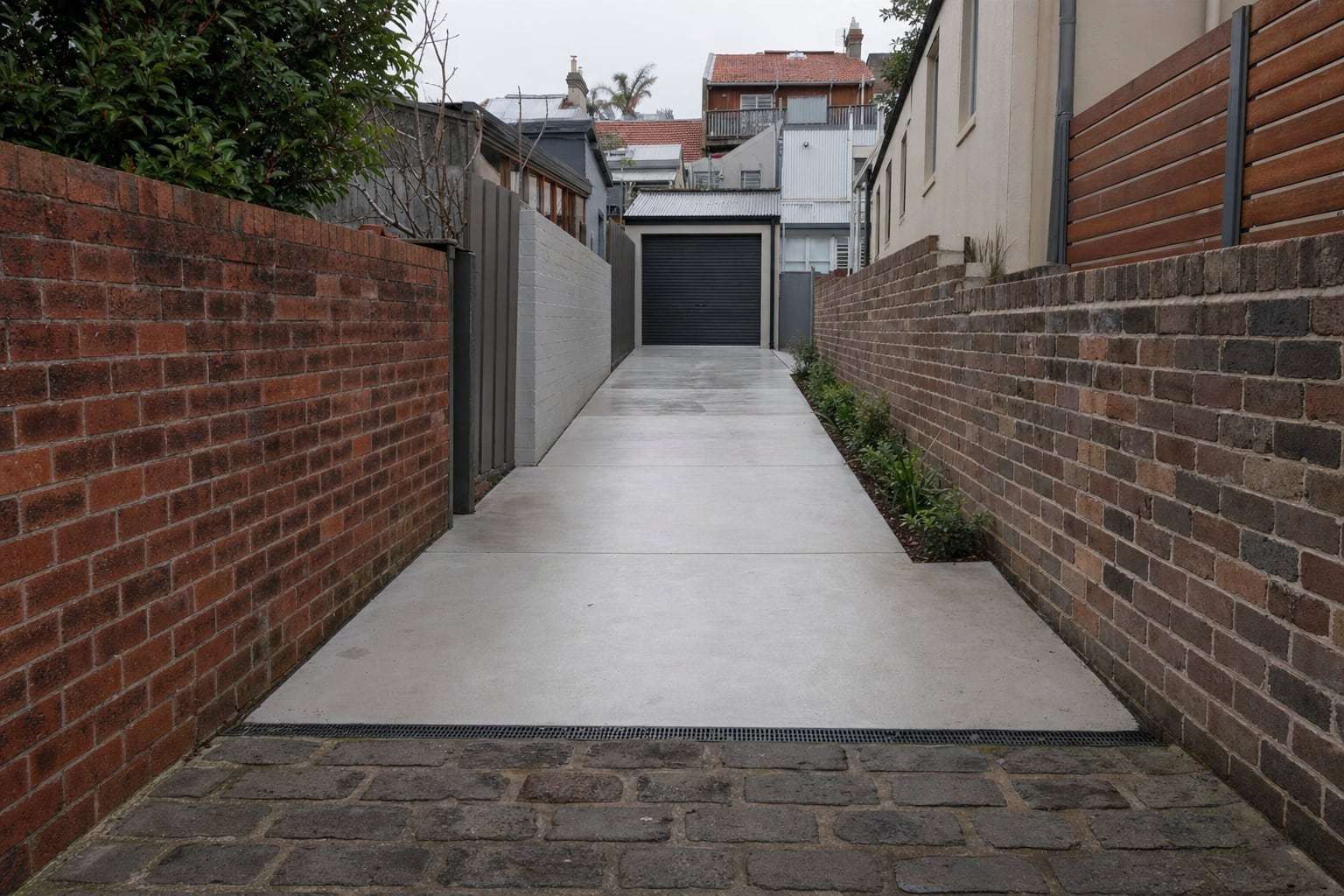
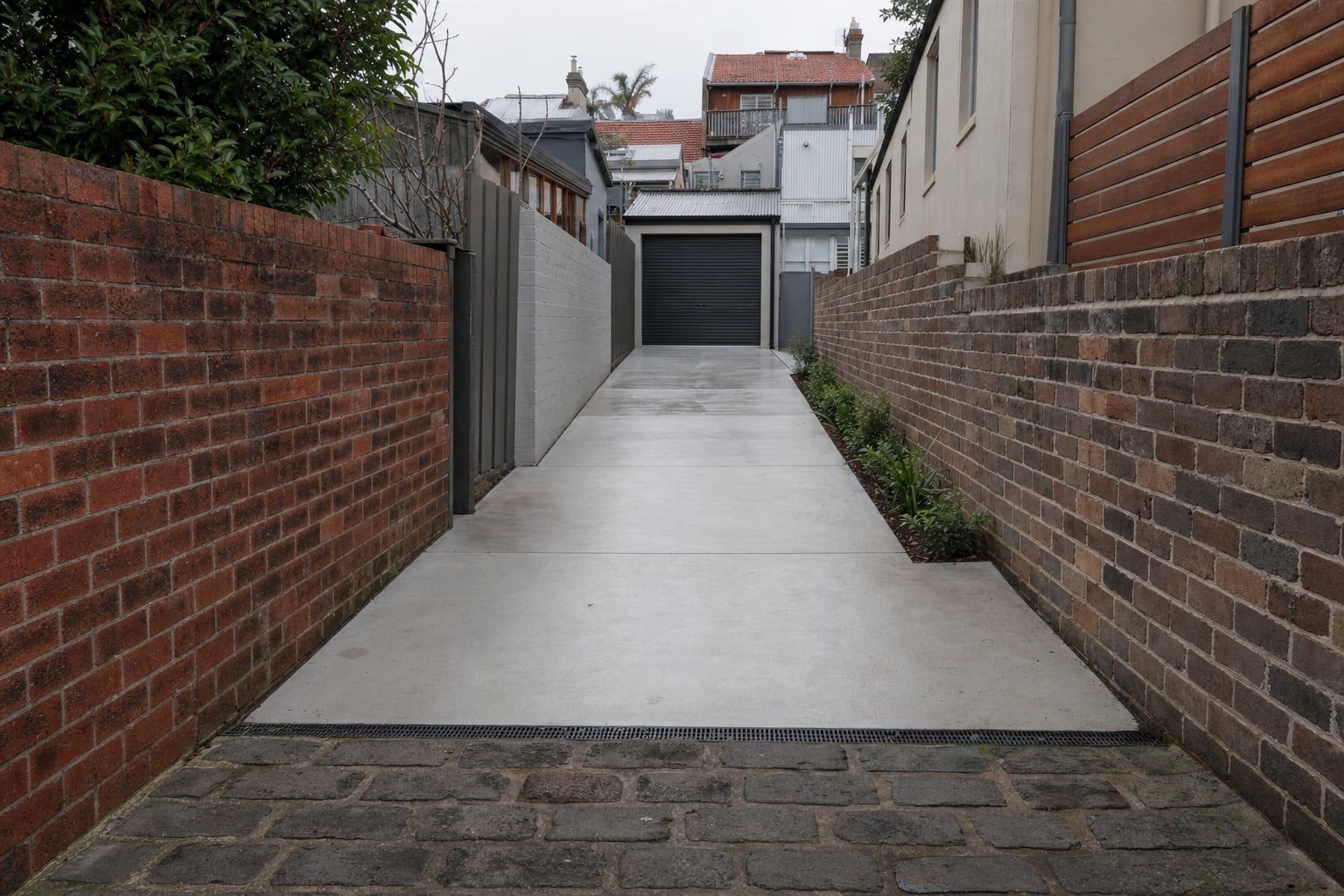
Rear-lane concrete driveways in the Inner West
Levels, council approvals, drainage and access for a concrete car space off an Inner West rear lane.
Rear lanes are one of the Inner West’s quiet advantages. In Marrickville, Leichhardt, Petersham, Annandale and Ashfield, lanes behind the houses let many terraces and cottages have off-street parking that would be impossible from the front. Turning the back of your block into a concrete car space is one of the most common jobs our Inner West concreters quote, and one of the easiest to get subtly wrong.
Start with the lane
Before thinking about concrete, look at the lane itself. How wide is it? Is it sealed, or gravel? Is it higher or lower than your yard? Do cars park in it? These things decide where the opening goes, how big the car space needs to be and how the slab meets the lane.
Most lanes are public roads managed by Inner West Council. Work that changes the lane, adds a crossing or alters the kerb usually needs approval. Some lanes are private rights of way shared between neighbours, which has its own rules. Check before you plan.
Getting the levels right
The trickiest part of a rear-lane car space is the level where your slab meets the lane. If the lane is higher than your yard, rain from the lane runs straight onto your property. The slab then needs a lip, a drain across the opening, or both. If the lane is lower, you may need a short ramp, and cars can scrape if the change is too sharp.
Your concreter should measure the lane level, your yard level and the house floor level, then set a fall so water leaves the slab towards a drain, not towards the house or the neighbour’s fence.
Drainage on a small block
Inner West blocks leave little room for water to soak away. A concrete car space adds a lot of hard surface, so the run-off needs a planned path:
- A grated drain at the low edge of the slab
- A connection to your stormwater system, or to the street if that’s how the property drains
- No run-off onto the neighbour’s land, which is both a nuisance and a common cause of disputes
Old terraces often have clay stormwater pipes that are cracked or blocked. A new slab is a good time to check them, because fixing pipes under new concrete later is costly.
Structure: base, steel and joints
A car space needs a firm, compacted base, reinforcing mesh and concrete thick enough for vehicles, which for houses is commonly around 100 mm. Inner West clay moves with the seasons, so joints should be planned to give the slab neat places to crack. The edge where the slab meets the lane carries the heaviest loads as cars turn in, so it’s often thickened.
Getting concrete into the lane
Concrete trucks can be too big for narrow lanes, and blocking a lane affects every neighbour. Common solutions:
- A small concrete pump set up at the lane entrance
- A line pump with its hose run from the street
- Booking the pour early in the morning
- Letting neighbours know a few days ahead
Gates, fences and heritage
Many car spaces need a wider opening in the rear fence or wall, and sometimes a new gate or roller door. In heritage conservation areas, changes visible from the lane may still need consideration. Old brick boundary walls can also be fragile, so ask how the opening will be formed and finished.
Bins, bikes and the rest of the yard
A rear car space rarely only holds a car. Plan room for bins to come in and out without squeezing past the car, a spot for bikes, and a path to the back door that stays dry. A few extra square metres of concrete, or a separate path in a contrasting finish, can make the whole back of the block work better.
Finishes
Plain broom finish is hard wearing and has good grip for a car space. Exposed aggregate looks better if the space doubles as a courtyard on weekends. Darker colours hide tyre marks and oil best.
Fixing an old lane slab
If your rear car space is cracked, sinking or sends water towards the house, it can often be fixed by replacing the worst panels and correcting the drainage. Our concrete repairs page explains the options.
Before you get quotes
Measure your car and the lane width, take photos of the lane in rain if you can, and check who owns the lane. Then ask for a site visit. A local Inner West concreter will check levels, access and drainage, and quote a concrete driveway that suits your block.
Updated
Frequently asked questions
Who owns the rear lane behind my house?
Most Inner West lanes are public roads managed by council, but some are private or shared rights of way. Your property title and council can confirm it. It matters, because work in a public lane needs council approval.
Can I widen the gate to my rear lane car space?
Usually, but it may need approval, particularly in a heritage conservation area or where a new crossing is involved. Check with Inner West Council before the fence or wall comes down.
What size does a rear-lane car space need to be?
It depends on the car and how tight the turn from the lane is. Narrow lanes need a wider opening or a deeper space so the car can swing in. Measure your car and the lane, and your concreter or designer can set it out on site.
Concrete Driveways in the Inner West
More guides for Inner West homeowners
Ready to get it quoted?
Get a fast, free quote from a local concreter. No obligation.